
What’s In A Name?
by Sally Gunning
Do you ever wonder how roads and places got their names? For example, Airline Road got its name from a surveyor’s air line, but don’t try to tell that to the developers who named the streets all along the way: Pilot Way, Jet Drive, Propeller Way, etc.
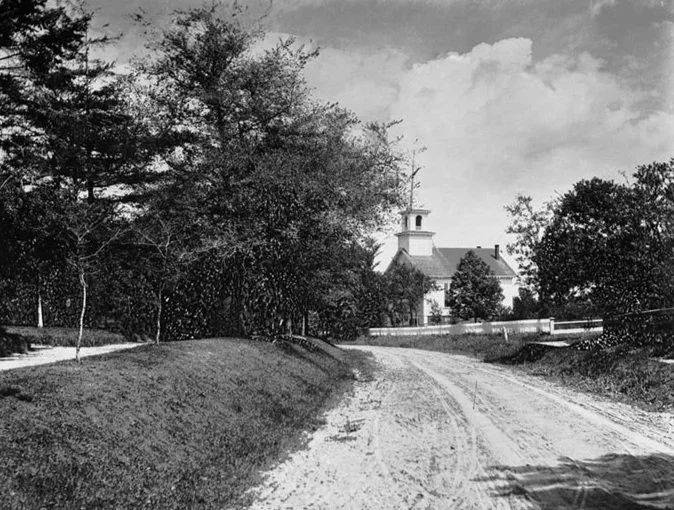
Brewster Main Street view
Here in Brewster we have a history of being more...well, I guess the word would be literal.
Foster Road got its name because it was where Chillingsworth Foster lived. (And there’s a twofer for you — now you know how the restaurant got its name — it was once upon a time the home of Chillingsworth Foster). North Road led to the North shore. Point of Rocks Road led to the point of rocks. Breakwater Road led to the breakwater built to shelter the packets which carried goods and passengers to Boston before the railroad came in. Lower Road was the lower road as opposed to the upper, or main thoroughfare, which eventually became Main Street or Route 6A, but that main thoroughfare originally ran along Stony Brook Road, which got its name...you get the idea.
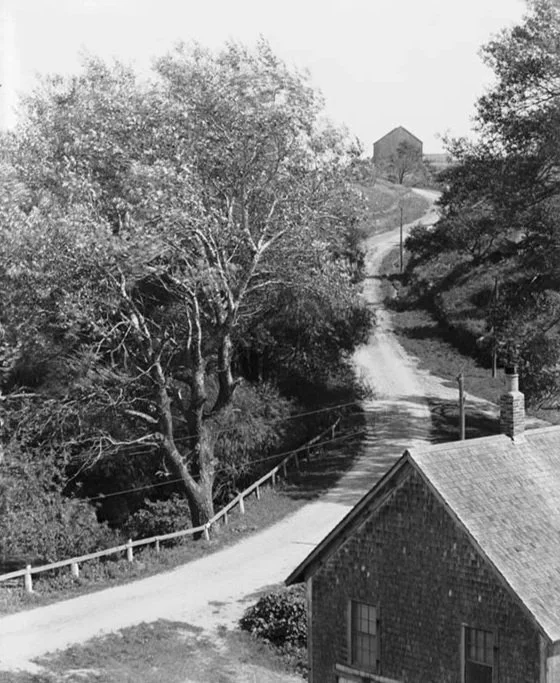
Brewster Stony Brook Road
But road names do change. The original Dillingham Road is now A.P. Newcomb Road. It had been called the Dillingham Road all the way back to the 1600s because it ran from John Dillingham’s house on 6A to the town’s commercial district around the grist mill. Dillingham’s circa 1660 house still stands, at 597 Main St., as does Percy Newcomb’s, but Percy’s is now Brewster by the Sea bed and breakfast. Percy Newcomb’s claim to immortality stems from longstanding service as town clerk and treasurer, or perhaps also from the 20-year feud he and his brother waged — despite living in two sides of that same house. Satucket Road was once Setucket Road until a town archivist delved into the records and felt the correct spelling should be “Satucket.” (She happened to live on Satucket Road). Why Satucket? The native peoples who lived in the mill area were called the Sauquatuckets, but the English chopped it down to something more manageable — for them. When the town of Harwich, which then included today’s Brewster, was incorporated in 1694, the deed referred to the area as “the Satucket Lands.” But why did this one road get the name of all of Satucket, which represented an area that ran “from sea to sea (Cape Cod Bay to Nantucket Sound) as the 1694 deed states? You’ll understand if you drive the length of the road and find yourself in Yarmouth — early settlers from Dennis and Yarmouth and beyond traveled to today’s Brewster, then Satucket, to get their corn ground at the grist mill, or their cloth fulled at the fulling mill, or their skins tanned at the tannery, so of course they would call the road that carried them to Satucket the Satucket Road. You see what we mean about literal. (You’ll also note, if you travel the length of the road as far as Yarmouth, that it remains “Setucket” at the other end).
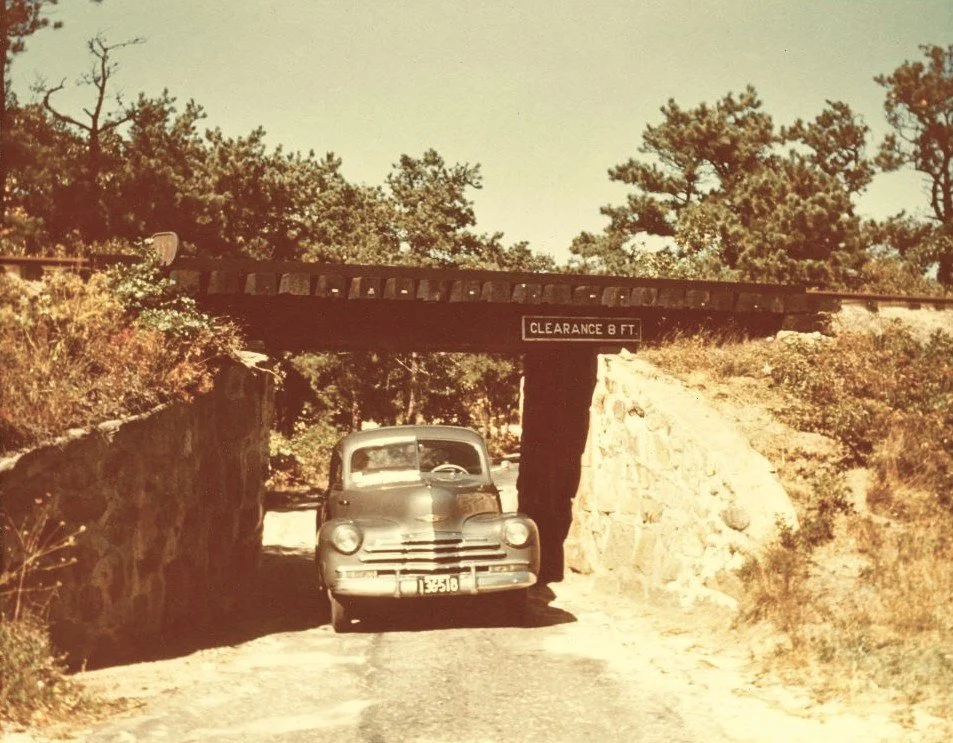
Underpass Road Brewster MA
But what about Underpass Road?
Some of you will remember the underpass beneath the railroad tracks that crossed the road (see photo). It was installed in the late 1800s when the railroad came to the Cape; Brewster had at least two stations. The railroad tracks were taken up some time in the early 1960s after they wisely stopped hauling sand by train from the Provincetown dunes for use in the Sandwich glassworks.
That part of Underpass Road was then changed significantly when the Brewster Elementary School (now the Stony Brook School) was built, because they needed to make it safe for the school buses.
Many, many roads in town are named after the first washashores - the English settlers who were granted lands here in payment for their contributions in settling the Plymouth colony in those first grueling years, or who drifted down Cape soon after.
You'll find Brewster, Alden, Allerton, Prence, Hopkins, Freeman, Myrick, Bradford, Snow, Winslow, Winthrop, and more throughout town. Let’s hope the street names Satucket, Massasoit, Sagamore, and Nauset, the last remnants of once vital tribes, remain.
Sally Gunning is president of the Brewster Historical Society.
THE BREWSTER HISTORICAL SOCIETY
