
Oh, the Places She Went!
By Sally Gunning
Brewster’s shipmasters are famous. By 1850 the clipper ships, the fastest, most expensive, and beautiful sailing vessels in the world, had revolutionized the twin worlds of marine architecture and trade. The ships’ concave bows, flared hulls, and extra sails required a shipmaster with exceptional dexterity and nerve, and Brewster men filled that bill in extraordinary numbers. Fifty of these shipmasters resided in Brewster in the year 1850 alone, the largest percentage of shipmasters per population in the country.
But what about the women? Wives, sisters, and daughters eagerly (mostly) shipped aboard, and some of them had a hard time stepping back on shore again. As Sarah Luce of Martha’s Vineyard wrote in her journal: “I am glad to get back to my home aboard ship.” The sentiment was echoed by Mary Chipman Lawrence of Falmouth: “I shall feel badly, after all, to give up my Addison [shipboard] home.”
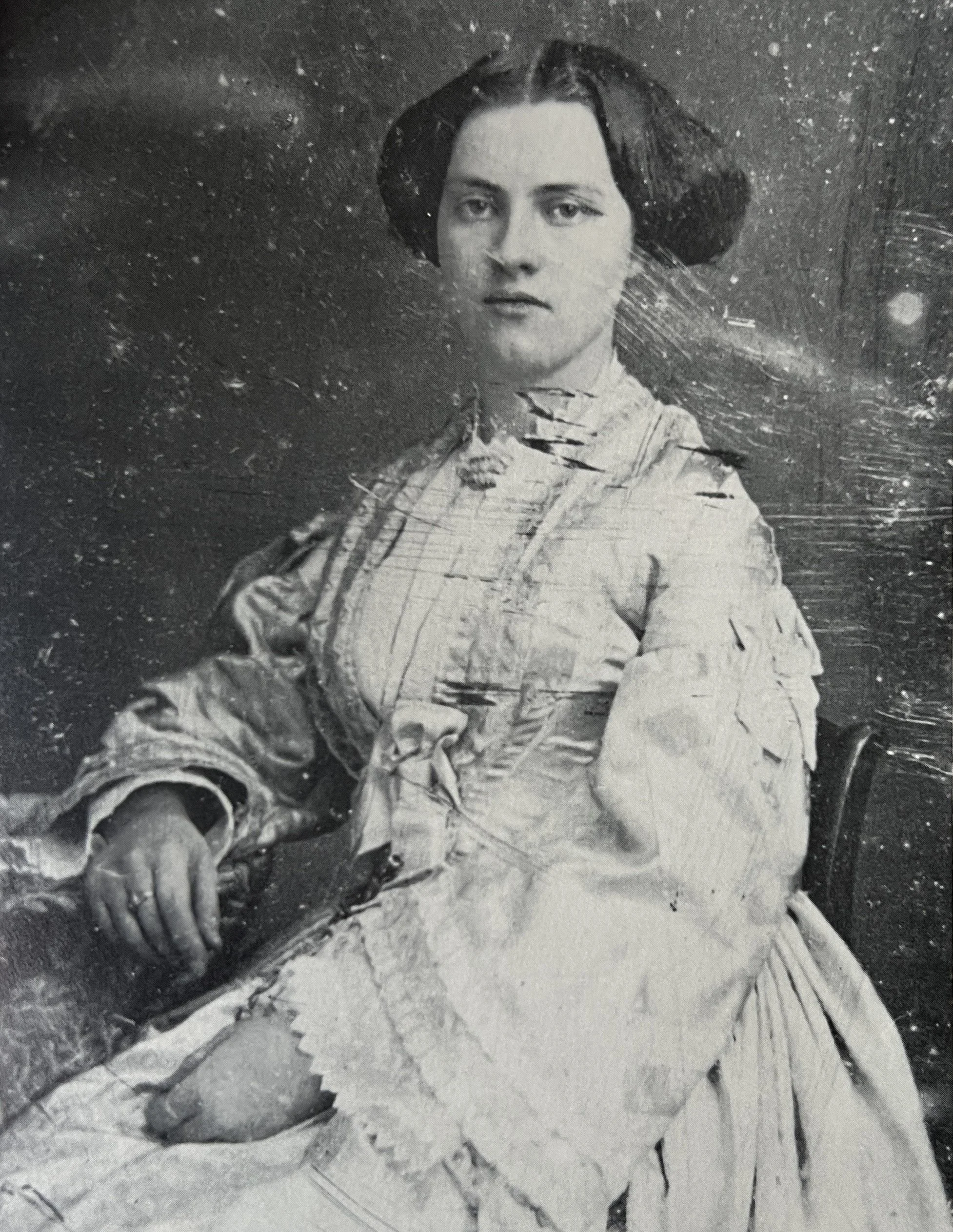
Hannah Rebecca Burgess
Hannah Rebecca Burgess, wife of Brewster shipmaster William Burgess, shared a commonly expressed motivation for women who set sail: “I know that I love the sea but more I love to be with my husband.” Harriet Gifford of Falmouth wrote: “We have been married five years and lived together ten months. It is too bad. Too bad.” These women soon learned that if they wanted to fully experience married life, they would have to do it aboard their husbands’ ships.
Although there was the occasional journal entry like this one: “Captain Wood brought his wife out as far as Valparaiso (Chile), from which place she being tired of the sea, left for home,” seldom did these women seem to regret the decision to leave a known world on land for an unknown one at sea. Many of them had never previously left home, and many of the shipmasters they lived among never came home. They heard of Susan Paine Lincoln, wife of Brewster shipmaster Joseph Lincoln, who was swept overboard, and of Ulah Harding Reed of Chatham who was attacked by a first mate with a knife. (“Oh, there are always little things like that happening at sea,” she responded when quizzed about her ordeal). So, one might imagine that to step aboard ship required some considerable nerve on the part of the women as well.
But aside from her husband’s companionship, there were other rewards to be found in life aboard ship. “Went on deck to witness the rising of the sun,” Bethia Mayo Sears Knowles noted in her journal. “It is grander than anything I have ever witnessed.” And as Mary Chipman Lawrence wrote: “When I was a schoolgirl studying geography, how strange it would have seemed had anyone told me that I should view these places with my own eyes.”
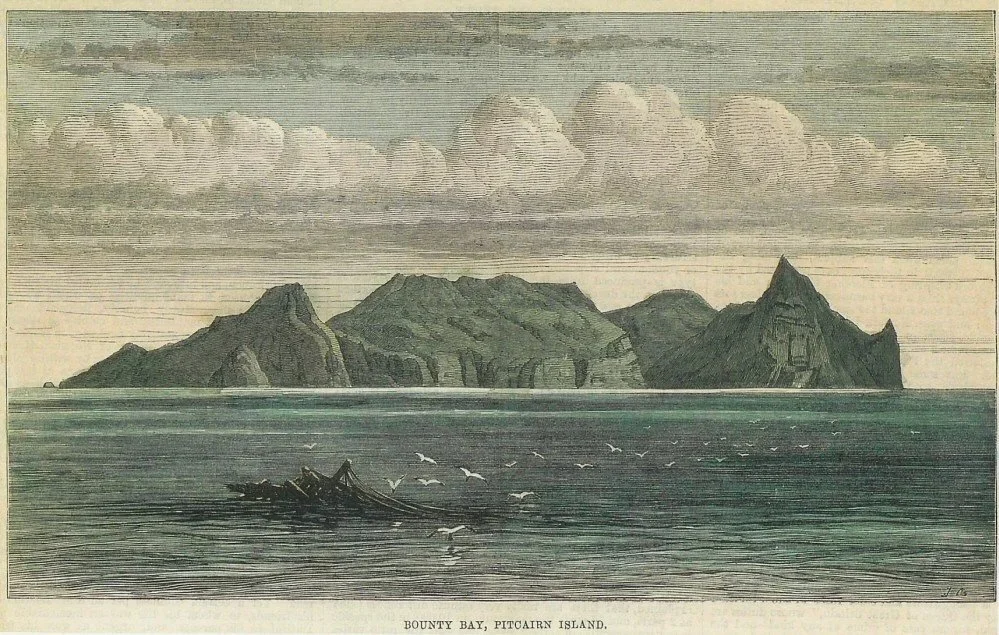
Pitcairn etching
· Clara Freeman, daughter of Brewster shipmaster William Freeman, turned eleven years old while on a journey from Cardiff to Rio de Janeiro aboard the ship Mogul. On a later voyage, aboard the ship Jabez Howes, she became the first White woman to visit Pitcairn Island, the hide-out of the mutineers of Bounty fame.
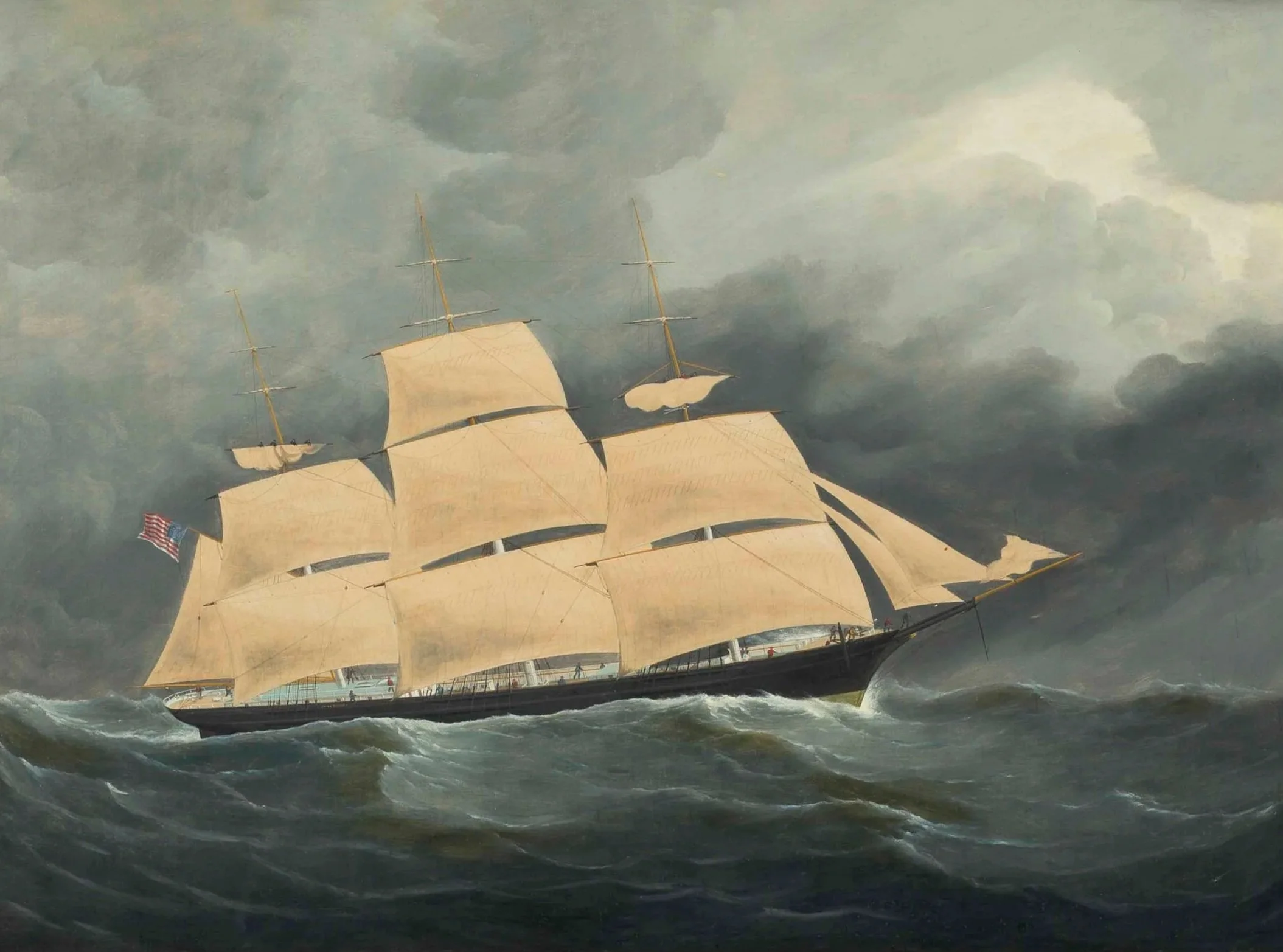
The Wild Ranger
· Nineteen-year-old Bethia Mayo Sears Knowles spent her honeymoon traveling with her husband, Brewster shipmaster Elisha Knowles, on the clipper Wild Ranger, as he sailed from Boston to San Francisco to Calcutta.
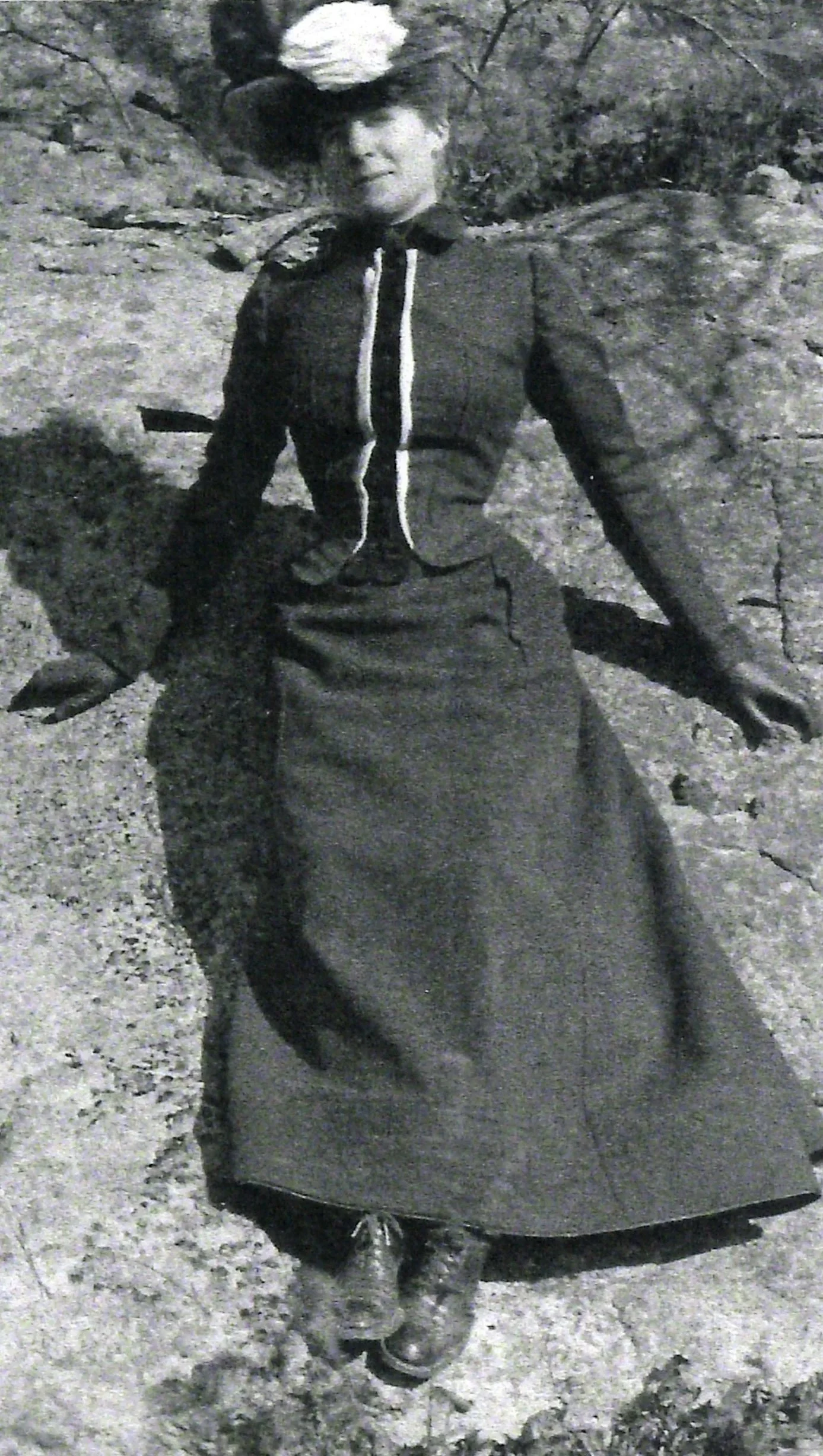
Florence Freeman
· Florence Freeman, whose father, uncle, and two brothers were Brewster shipmasters, traveled three times around the world with her brother Charles Freeman on the James A. Wright.
· Eliza Emma Winslow Foster married Brewster shipmaster Francis Bailey Foster in 1868 and sailed around the world with him seven times.
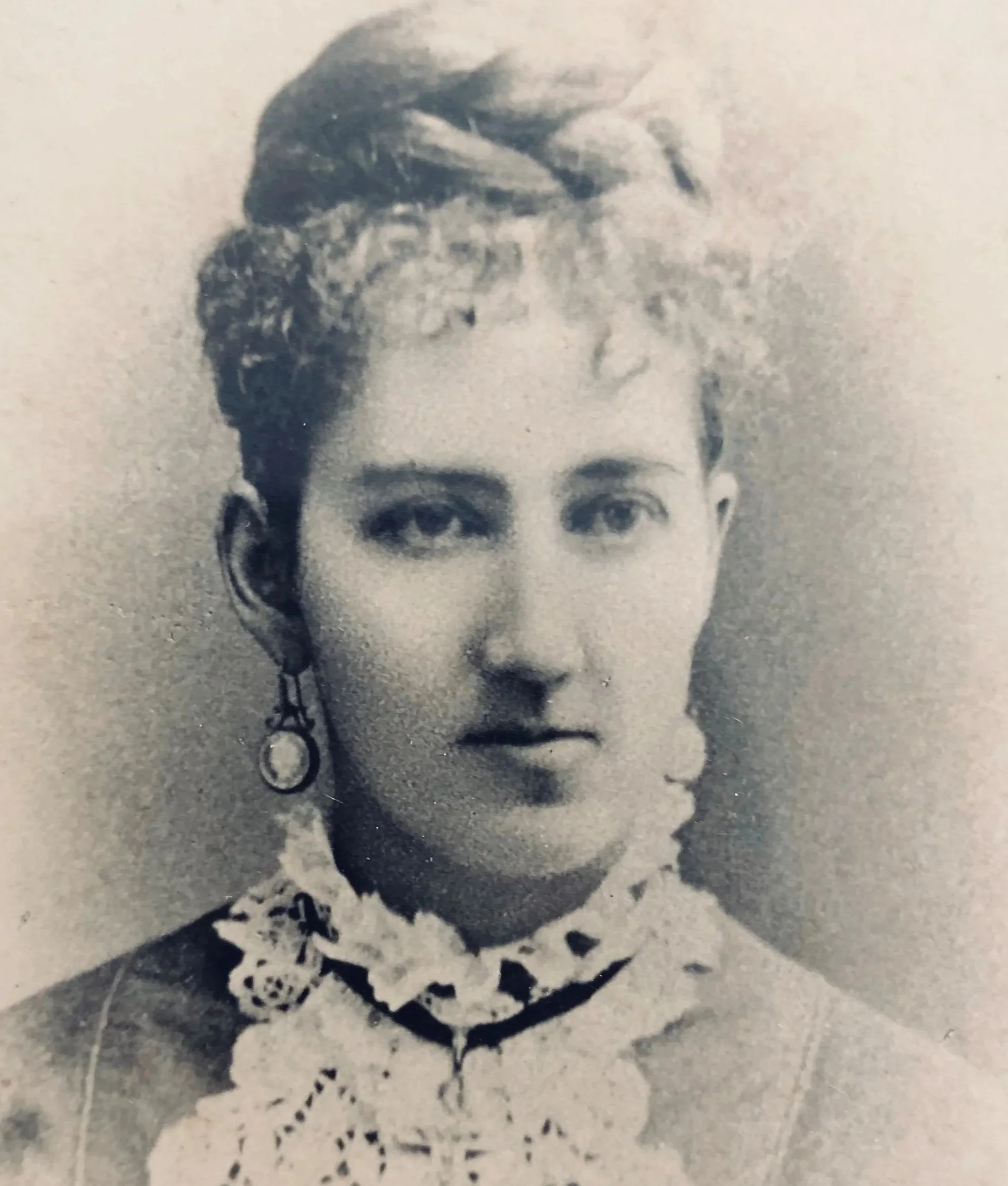
Eliza Emma Winslow
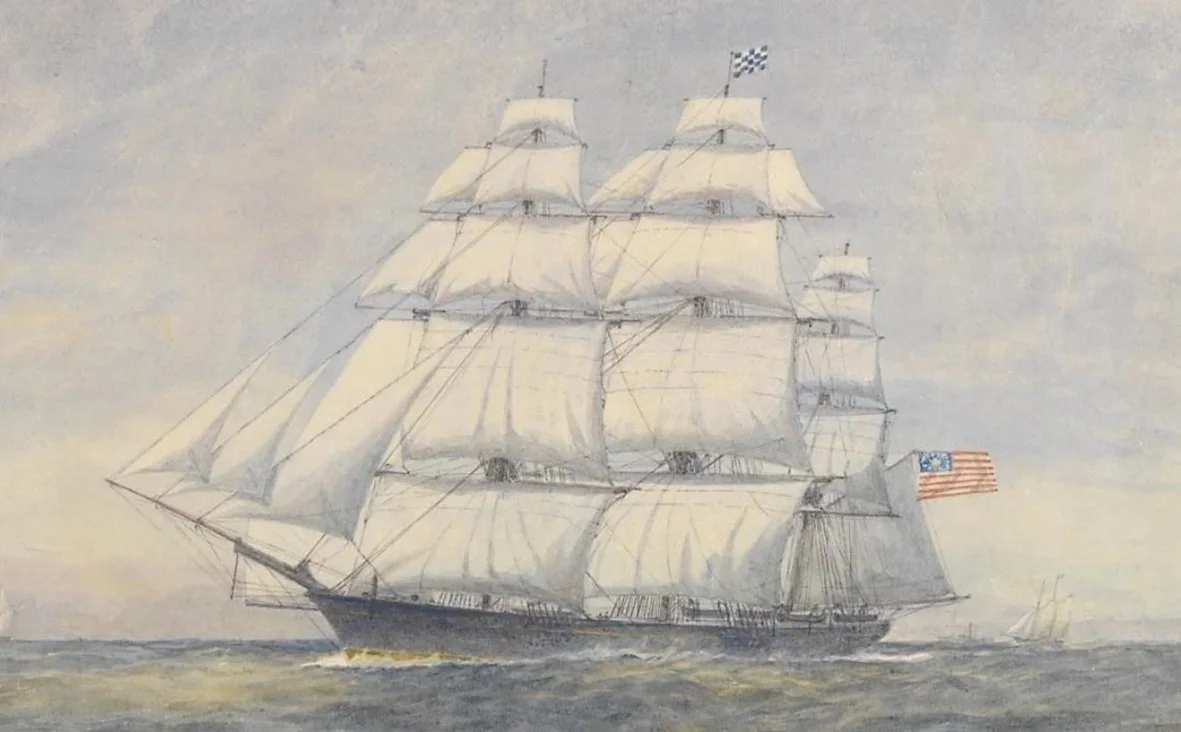
Clipper Challenger
· Hannah Rebecca Burgess, wife of Brewster shipmaster William Burgess, sailed with him to California aboard the clipper Whirlwind and around the world on the extreme clipper Challenger.
Visit our Cobb House Museum at 739 Lower Road, Brewster, to discover more about these women and their stories. (For museum hours go to www.brewsterhistoricalsociety.org)
Sally Cabot Gunning is President of the Brewster Historical Society.
