

Brewster’s Saltworks Industry
by Sally Gunning
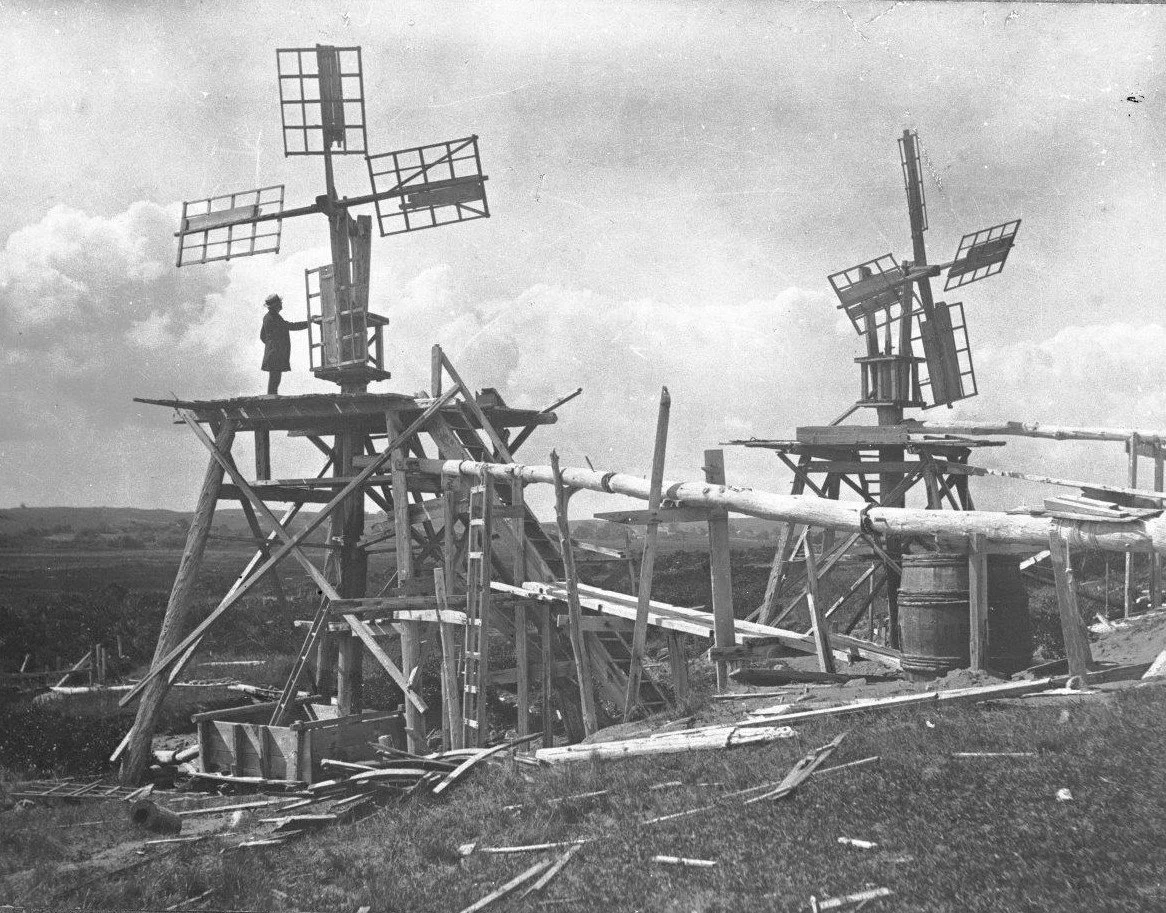
Brewster’s Saltworks, circa 1800’s, courtesy of Brewster Historical Society’s Caro A. Dugan Collection
Did you go swimming in the Bay or Ocean this summer and then dry off in the sun? Did you feel your skin tighten with that lovely crust? That’s the salt residue left when the water evaporates. And at one time here on Cape Cod, that crusty coating was as valuable as gold.
Before refrigeration, salt was essential to the New England fishing industry. Without salt, the usually lucrative commodities like cod and herring were worthless. But there were no local sources of salt in early America, and the colonists relied on Britain to supply it. When the British blockaded the coast during the American Revolution, the industry was slated for collapse.
Boiling water down for the salt proved too costly in time, effort and firewood – it took two cords of wood and 400 gallons of water to produce a bushel of salt. But in 1776 Captain John Sears of Dennis tried the unheard-of idea of letting the sun evaporate seawater in large wooden vats.
It was still a laborious task to fill the shallow vats with seawater, bucketful by bucketful. In November 1778 Sears scavenged a bilge pump from the shipwrecked British Man-of-war HMS Somerset, but he was still pumping water by hand from the sea, until a Brewster man (then still part of Harwich), Nathaniel Freeman, suggested using windmills to pump the water through hollowed out logs to the vats. The success of this device was immediate. In 1793, a Harwich carpenter named Reuben Sears built a sliding square roof that opened and closed on oak rollers to keep the salt safe from rain, and children were even let out of school to close up the vats.
By 1806 Reverend Simpkins could report that there were 60 or 70,000 feet of saltworks in Brewster. Elijah Cobb alone owned 10,000 feet of saltworks. The saltworks industry reached its peak in the 1830s and was vital to the town of Brewster that during the War of 1812 the British threatened to blow up various towns’ saltworks unless a ransom was paid. Other Cape towns resisted, but Brewster paid.
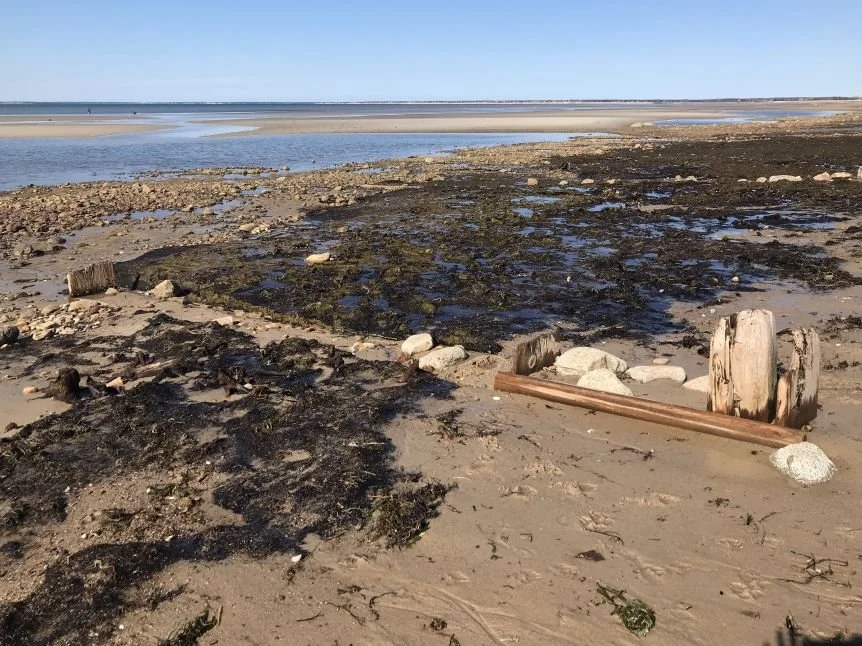
The remains of saltworks exposed after a storm at Spruce Hill Beach, Brewster.
After a time, salt mines were discovered and the arrival of the train to Cape Cod made its transport expedient. Today you might find a salt-encrusted board buttressing someone’s shed, but that’s all that’s left of this one lucrative Cape Cod industry.
