

Running Rum and My Favorite Find on the Brewster Flats
by Sally Gunning
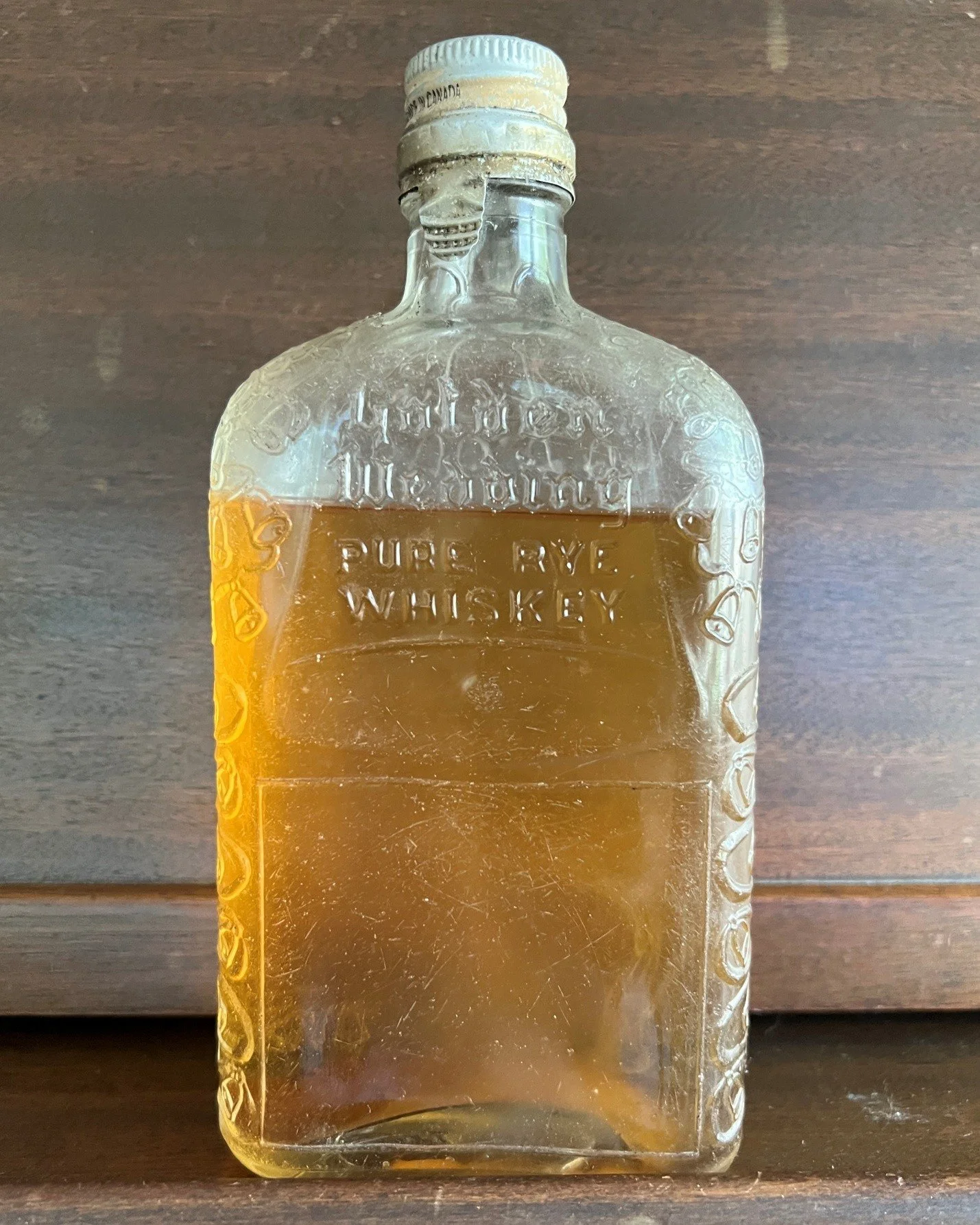
Golden Wedding Whiskey
In 1994 I was out on the Brewster Flats (otherwise known among my family as our “church”), engaging in one of my favorite activities: hunting for sea clams. That day the clams were scarce. When I fought a seagull for one I decided that exercise was getting pretty undignified and I gave up. As I turned for home (a good mile and a half of sand away) I looked down one last time and spied something unclam-like sticking out of the sand: the neck of a bottle, seal intact. I dug it out and found that it contained an appealing brown substance with some sediment in it. I read the bottle label: “Golden Wedding Whiskey.” I couldn’t wait to get home and look it up.
Prohibition, in the form of the Volstead Act, went into effect in 1920 and lasted until 1933. Massachusetts — and especially Cape Cod — was a haven for rumrunners due to the many inlets in its coastline and the unused docks and empty houses of summer residents boarded up for the winter. A “rum row” was established off the coast, just outside the three-mile limit of Coast Guard jurisdiction, known as the “rum line.” (In 1924 this line was extended to 12 miles). One account reported so many lights from ships lined up offshore it looked like a city.
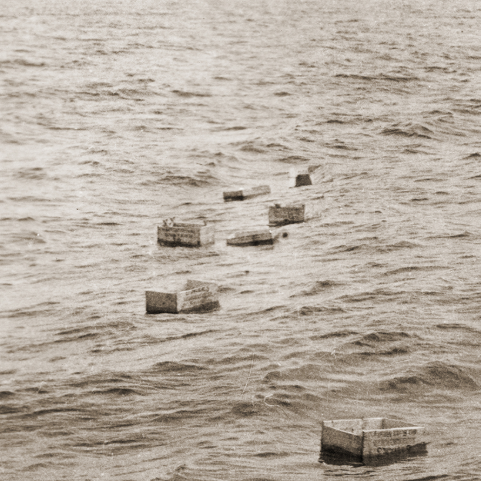
Small fishing boats — later power boats souped up with Liberty engines and special cocks for quick sinking to evade the Coast Guard — would motor out to larger ships anchored just outside the limit, off-load the liquor, and deliver it to shore. Signal boxes with lanterns inside would be set up on the beach so the light would only be visible on the seaward side, indicating the coast was clear. Money would change hands, liquor would be hustled into waiting cars and trucks, and off it would go. Sometimes a false distress call was sent out to lure the Coast Guard away, but the Coast Guard, local police, and the rumrunners often knew each other, so deals were known to be made.
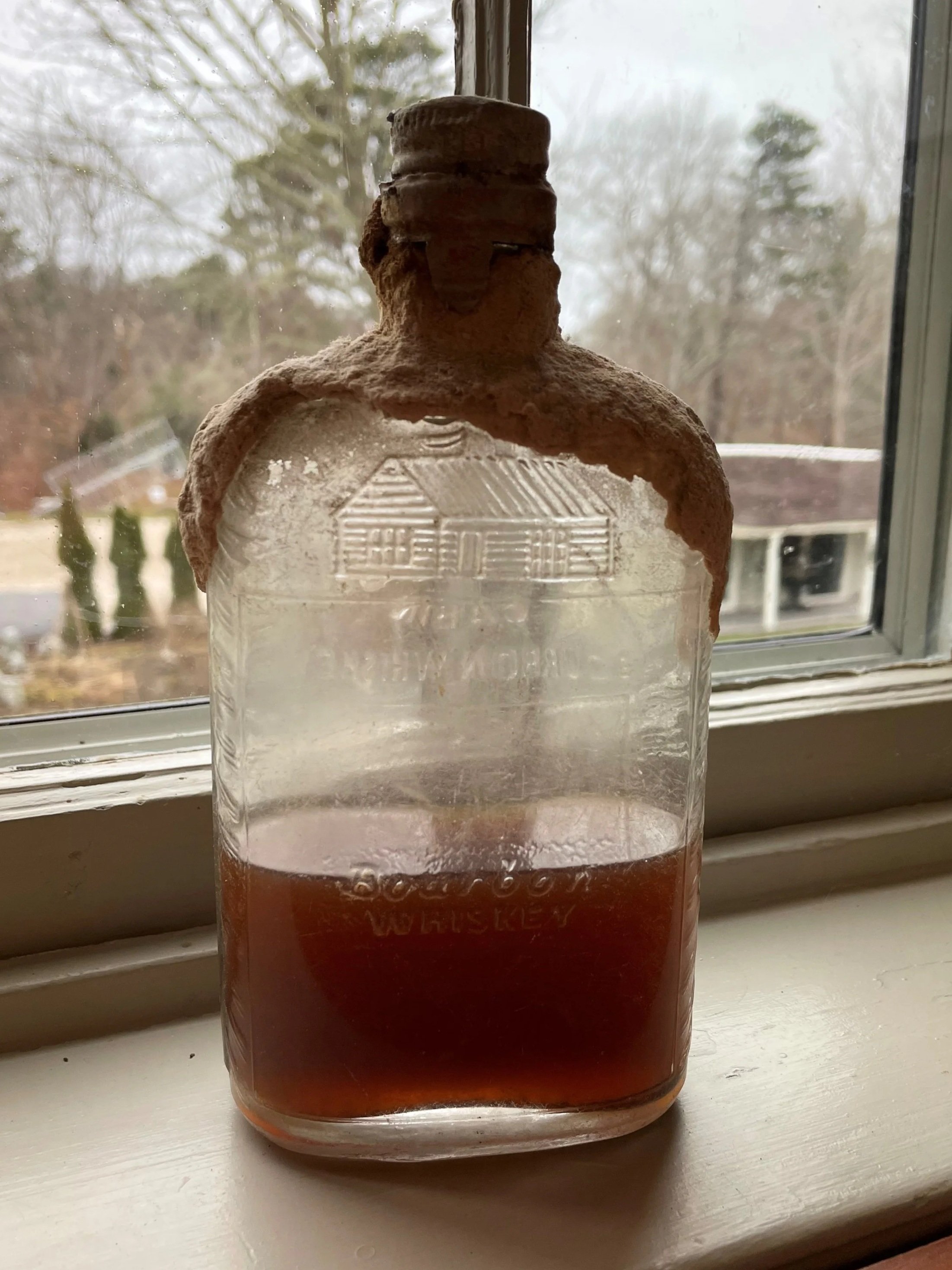
Found bottle from Cape Cod Bay
If the chase got too close, the liquor was jettisoned over the side or dropped gently into one of our handy creeks, or sometimes the boat itself was scuttled. The special cocks allowed it to go down fast, along with its incriminating evidence. What was the Coast Guard to do then? Rescue the rumrunners now bobbing in the sea! But with no boat and no liquor, no arrest could be made. Another rumrunner trick was to pack the liquor in burlap bags weighted with salt. A rumrunner evading the Coast Guard could drop the bags overboard in a creek or inlet, the salt would later dissolve, and the bag would bob to the surface, ready for collection by the watching rumrunner (or a lucky passerby. One tale told in Eastham involved a stash jettisoned near a local beach and scooped up by a beach walker, who brought it home to his horrified wife, sure her husband’s newfound bounty would be found, and he would be either arrested or killed).
But the Coast Guard had a few tricks of its own. They were always on the alert for “fishing boats” sans catch sitting too low in the water, indicating a false bottom full of liquor. A patch of paint that didn’t match often meant the rumrunner had tied up alongside a mother ship to unload the liquor. And if by chance the Coast Guard did manage to catch and confiscate one of rum boats, they converted it for their own use, for like as not it was faster than their own.
In 1928 a bottle of brand liquor sold for $70, and if a local fisherman suddenly began to eat better, rum, not fish, was often the cause. But where there was money to be made the mob was not far behind, and things started to get dangerous, gangland slayings arriving on sleepy old Cape Cod. One of the more gruesome tales involves five men missing fingers and faces washed up on Martha’s Vineyard.
In 1933 Franklin Roosevelt, fond of an evening cocktail himself, repealed the Volstead Act. What Hoover had called the “noble experiment” had failed to reduce alcohol consumption due to widespread smuggling, and the economic toll that resulted from closed businesses and unemployment was severe. Finally, instead of reducing crime as had been predicted, it had increased it. So now the only thing left to remind us of this brief but colorful episode in our history is the occasional bottle poking its neck out of the sand.
Sally C. Gunning
President
Brewster Historical Society
